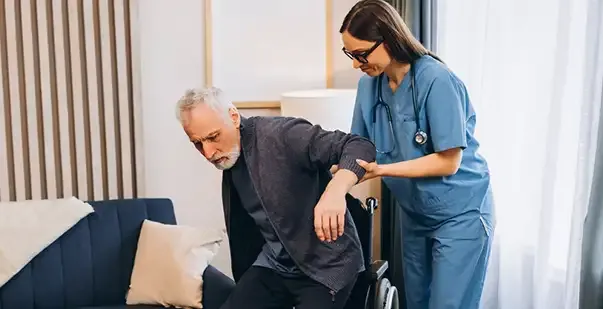
If you are in healthcare, you may need to move patients from one place to another, whether it is from a bed to a wheelchair or from standing up after sitting. While these tasks sound simple, they can put both the caregiver and patient at risk of injury if not done properly. In fact, according to the Bureau of Labour Statistics, 80% of all injuries in professional caregivers are the result of lifting, pulling, pushing, holding, carrying, and turning.
But it does not have to be this way. With proper body mechanics and transfer training, you can protect yourself while assuring comfort and safety for the patient you are taking care of. So what are the safe lifting techniques and best practices that you should be aware of? Keep on reading to find out!
What is Body Mechanics?
As a caregiver, you help elderly or injured people to safely move from one place to another every day. But do you understand the science behind safe movement? Body mechanics refers to how you coordinate your body during movement. It coordinates your posture, balance, and muscles to work together to reduce the strain.
Core Elements of Body Mechanics
Proper Body mechanics and transfer training ensure injury-free caregiving. The key elements of body mechanics include:
Base of Support: Stand with the feet firmly on the ground and a little wider apart to help with balance and equal weight distribution.
Center of Gravity: Bend your knees to increase your stability and align your center with the client's to reduce mechanical strain.
Line of Gravity: It should fall within your base of support for stability to prevent off-balance positions that cause injury.
Posture and alignment: The spine sustains curves throughout various movements. At a neutral position, you can evenly distribute the forces and automatically engage core muscles for protection.
Read More: How Long Does It Take to Become a Certified Caregiver?
How to Apply Body Mechanics in Patient Transfers
You understand the theory of body mechanics and safety transfer training, but how do you apply it practically? Here are the dos and don'ts of every transfer to ensure your safety and the safety of your clients:
Rule 1: Plan Before You Move
Always evaluate the situation fully before you touch the client. Identify what type of transfer you will perform and which equipment you will need. Even if you are a home caregiver, communicate your plan clearly to everyone involved. Mental rehearsal prevents mid-transfer adjustments that cause injuries.
Rule 2: Position Yourself Optimally
Adopt the correct stance, with feet shoulder-width apart. Have one foot forward for directional stability. Your body faces the direction you will move toward. This positioning uses your strongest muscle groups efficiently.
Rule 3: Keep the Load Close
Keep the client as near to you as possible. Every inch of distance multiplies the effective weight exponentially. Your center of gravity should align with the client's throughout the movement. Closeness provides maximum control and minimum strain.
Rule 4: Use Your Legs, Never Your Back
Now, bend at the knees and hips, but not the waist. Your powerful leg muscles generate the lifting force safely. Keep your back straight and straighten your legs to lift to ensure you have the right stability.
Rule 5: Move Smoothly Without Twisting
Pivot your whole body with small steps. Never twist your spine when weight is on it. Smooth, controlled movements avoid sudden spikes of stress. Jerky movements stress tissues and startle clients.
Rule 6: Settle and Safety Check
Ensure the client is properly positioned and secure. Verify that equipment like wheelchair brakes is engaged. Check or ask the client immediately for any discomfort or distress. Take a moment to reset your own posture before moving on.
What Equipment should be used to Enhance Safety?
There are modern assistive devices that make transfers safer for everyone. When you enroll in body mechanics and transfer training, you will learn when and how to use equipment. Here are some of the tools to use:
Gait Belts and Transfer Belts
These sturdy belts wrap around the client's waist. You grip the belt rather than grabbing clothing or arms. This provides secure handholds without causing pain. Gait belts distribute pressure evenly around the torso. They are essential for clients with limited mobility.
Mechanical Lifts and Hoists
Full-body lifts eliminate manual lifting. You position a sling under the client carefully. The lift's motor raises them safely off the bed. You guide them to the destination without bearing weight. These devices protect both parties during transfers.
Slide Sheets and Friction-Reducing Devices
These slippery fabric layers slide against each other easily. You place them under clients who need repositioning. Moving someone up in bed becomes effortless. Slide sheets prevent skin shearing and caregiver strain. They are particularly useful for bedridden clients.
Transfer Boards and Discs
Solid boards create bridges between surfaces. Clients slide across rather than being lifted. Transfer discs allow smooth pivoting while standing. These simple tools reduce physical demands significantly. You accomplish transfers with less risk and effort.
Common Transfer Mistakes That Lead to Injuries
You have probably developed habits while transferring clients without realizing their danger. Body mechanics and transfer training help you identify and correct these risky behaviors. Some of them are:
Bending at the Waist Instead of the Knees
Leaning forward from your hips to reach clients creates enormous pressure on your back. When your muscles strain to support both your weight and the client's, it will create stress on your spine.
Reaching Too Far During Transfers
Reaching out with your fully extended arms to grasp or support a client creates maximum leverage against the shoulder joints. The distance from your center of gravity increases your effective weight dramatically. Your rotator cuffs and back muscles overwork to compensate.
Working Alone When Help Is Needed
Never attempt transfers that clearly require two caregivers. Your body compensates for the missing assistance through poor positioning. It will compromise your physical well-being as well as the client’s safety.
Ignoring Early Warning Signs
You experience morning stiffness, or your lower back hurts after certain transfers on a repeated basis But you ignore the discomfort as normal job-related fatigue. These signals indicate your body is sustaining damage.
Using Improper Handholds
Don’t grab clients under their arms or by their wrists. These grips can injure fragile client skin and joints. Your hands slip easily from these unstable positions. Proper gait belts and positioning create secure, safe handholds.
Practical Tips for Safer Transfers Every Time
Now that you have the caregiver skills for safe transfer, you need actionable strategies to feel less fatigued and strained after shifts. Let’s take a look at them below:
Prepare Your Environment First: Clear pathways of obstacles before beginning transfers. Check that floors are dry and ensure adequate lighting throughout the transfer route.
Communicate Clearly at Every Step: Explain the entire process before beginning. Tell clients exactly what you will do and when. Establish a clear stop signal if they feel uncomfortable.
Adjust Your Clothing and Footwear: Wear supportive, non-slip shoes with closed toes. Loose clothing gets caught on equipment or restricts movement. Avoid dangling jewelry that clients might grab accidentally.
Take Breaks Between Transfers: Take brief pauses between transfers to recover your muscles. Try to do some stretching to ease the stress in your lower back and shoulders.
Know your limitations: Be honest about whether you can handle a transfer safely alone. Some transfers always require assistance regardless of your skill and experience.
Read More: Top Benefits of Caregiver Certification for your Career
Body Mechanics and Transfer Training: Move Safely, Care Confidently
Proper body mechanics and transfer training protect everyone involved in care. Your body deserves respect and protection throughout your caregiving journey. The training teaches you evidence-based techniques to help you prevent injury at every stage. Moreover, you can ensure smoother, more comfortable, and dignified transfers for your clients. Enroll in our online caregiver training course to practice techniques under the supervision of experts and get certified at your convenience.
FAQs
What are body mechanics in caregiving?
Body mechanics include how you coordinate your body during movement. It involves posture, balance, and muscle coordination that all work together.
What is the proper way to lift a patient?
Bend at your knees and hips (not your waist), keep the patient close to your body, and use your leg muscles to lift while maintaining a straight back. Always pivot with your feet rather than twisting your spine.
When should you use a two-person lift for patient transfers?
Use two-person lifts when
References























.webp)