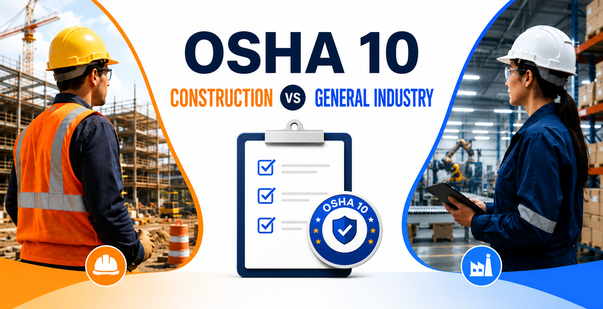
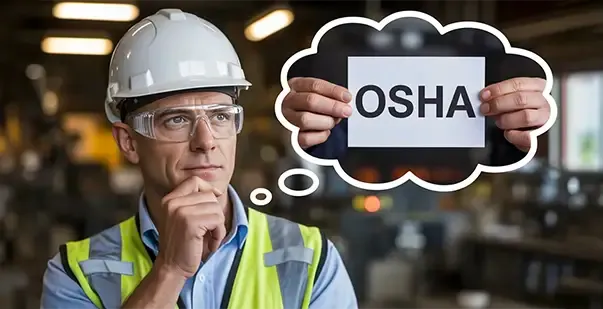
Starting a new job is exciting and nerve-wracking. Many entry-level construction or warehouse workers ask, “Do I really need OSHA-10 (Occupational Safety and Health Administration) safety training?” OSHA’s 10 construction and warehouse courses cover basic hazard awareness for construction or general industry. They are voluntary, not a federal requirement, but employers or local rules sometimes encourage them. It is a lot to learn as a new worker, and sorting out safety requirements can feel confusing. Let’s break down what OSHA 10 means, who needs it, and when on-the-job training is enough. By clearing up facts and myths, you will know if OSHA 10 is right for your first job.
What Is OSHA 10 and Who Needs It?
Entry-level workers are just starting their careers and often have limited experience in the field. They rely on basic training and guidance to learn safe work practices and build strong job skills. So, “Do you need OSHA 10 for construction?”. The OSHA 10-Hour Outreach program is an introductory safety course for new construction or general industry workers. It covers common hazards such as falls, electrocution, and struck-by incidents, and informs workers of their rights. Topics include:
In 2023, there were 1,075 construction-related fatalities in the U.S., and 421 of those (about 39 %) were due to falls from elevation- a risk area addressed in OSHA 10 training.
Courses typically last about 10 hours (often over two days) and conclude with a Department of Labor completion card. The program is voluntary. OSHA does not mandate it, but many employers, unions, or local laws do. It provides foundational safety knowledge that employers value.
Read More: What Is The Difference Between OSHA 10 and 30?
OSHA Requirements for Entry-Level Workers
Entry-level workers often hear about OSHA 10, but many don’t understand what training it actually covers. To help clear this up, it’s important to explain the OSHA 10 requirements for construction and how they differ from the training OSHA legally mandates.
Topic/Training | OSHA Requirement (Entry-Level) |
OSHA 10-Hour Outreach (Safety Orientation) | Voluntary 10-hour intro course for entry-level workers. Not required by OSHA, but widely used as basic safety orientation. Covers general hazard awareness and safe practices. Provides a DOL completion card (valid 5 years).
|
Job-Specific Hazard Training | Required when specific hazards exist. OSHA standards mandate training for risks like forklifts (1910.178), fall protection (1926.503), and lockout/tagout (1910.147). OSHA 10 does not meet these mandatory training requirements.
|
Hazard Communication (Chemicals) | Employees who are exposed to hazardous chemicals shall be trained on labels, SDS, and chemical risks upon hire and annually. OSHA 10 provides only an overview; full HazMat training is still needed.
|
PPE (Personal Protective Equipment) | Employers should train workers in the selection, fitting and proper use of PPE (hard hats, safety glasses, gloves, etc.) based on workplace hazards. OSHA 10 covers PPE basics but does not provide job-specific PPE training.
|
Other OSHA-Mandated Training | Required when applicable (e.g., emergency plans 1910.38, bloodborne pathogens 1910.1030, confined space 1910.146). OSHA 10 raises awareness but does not replace regulation-specific or site-specific training.
|
States Where OSHA 10 Is Legally Required
Some states and public agencies mandate OSHA 10 for entry level jobs. The table below highlights notable requirements:
State | OSHA-10 Requirement |
Connecticut | Public building projects funded by the state (>$100,000) require all workers to complete OSHA 10 within 30 days of contract award. |
Massachusetts | All employees on state and municipal construction projects valued greater that $10,000 must complete OSHA 10 before starting work. Non-certified workers are removed by law. |
Missouri | Any public works project requires workers to complete OSHA 10 within 60 days of starting the project. |
Nevada | All construction workers (and supervisors) must complete OSHA 10 (OSHA 30 for supervisors) within 15 days of hire. Certifications must be renewed every 5 years, or employees are suspended. |
West Virginia | Public projects ≥ $50,000 require every worker to have OSHA 10 on-site. Violations can lead to worker removal and fines. |
OSHA 10 for Warehouse Jobs: When Is It Useful?
OSHA 10 for warehouse jobs helps workers by building basic safety awareness before they begin handling daily tasks. It helps new employees understand common hazards, such as slips, falls, and heavy lifting. However, it does not replace specific, hands-on training that may be required for the use of particular equipment or specialized duties.
Broad Safety Awareness
The OSHA 10 general industry course covers broad workplace hazards in areas like chemicals, fire, and PPE, among others, and offers some foundational safety. This will let the new warehouse worker recognize and identify common risks such as falls, slips, or heavy loads, and make the job safer from day one safer.
Ideal for New Workers
OSHA 10 does not replace task-specific training. For example, forklift operators still need official forklift certification. Warehouse workers become cognizant of these prevalent hazards. It increases safety awareness, yet on-the-job training is still necessary for activities such as forklift operation that require special training.
General Industry Topics
The course covers general industry topics such as emergency procedures, material handling, and PPE use. Warehouse employees gain awareness of these common hazards. It raises safety understanding, but on-the-job training is still required for tasks like forklift operation, which need specialized instruction.
Complement to Equipment Training
OSHA 10 does not replace task-specific training. For example, forklift operators still need official forklift certification. OSHA 10 complements those requirements by focusing on general safety awareness and safety culture, but it does not fulfill equipment training mandates.
Employer vs OSHA Mandate
Keep in mind that OSHA does not mandate OSHA 10 for warehouse workers. It is a voluntary outreach program. Many warehouses choose to require it as proof of safety orientation, but it is only mandatory if an employer, union, or local regulation specifies it. Check your job requirements.
How OSHA 10 Training Boosts Your Career Growth
OSHA 10 can play a role in helping workers grow in their careers. It shows employers that you take safety seriously and are willing to learn more. This kind of training may also open small opportunities that support long-term progress.
Opens More Job Opportunities
Carrying an OSHA 10 card means that you understand safety hazards. This helps make you more competitive in finding jobs. It separates you from the rest of the competition, having a better chance at getting hired. Employers tend to look at and appreciate the extra training. It can open more doors in construction and warehousing careers.
Catches Employers’ Eye
Including OSHA 10 in your resume indicates a commitment to safety. That would mean you are not only proactive but also trustworthy. This differentiates you from other people in the job market and might give you a better chance of being invited for an interview compared to those who do not have such credentials.
Stepping Stone to Advancement
OSHA 10 acts as a gateway to higher certification or leadership opportunities, such as pursuing OSHA 30 for supervisors. It builds a foundation for more advanced safety training and shows you are actively building skills. Earning OSHA 10 signals ambition and can lead to opportunities in leading safety programs.
Networking and Knowledge
Completing OSHA 10 can connect you to a safety network; sharing your card on LinkedIn or discussing it with peers links you to industry experts and resources. This expands your knowledge and professional contacts. Being seen as safety-conscious can lead to collaborations that support your career.
Read More: In-Person Vs Online OSHA 10 Certification: Know All The Differences
Is OSHA 10 Worth It for Beginners?
OSHA 10 for construction and warehouse workers is not strictly required by federal law, but it can give you a safety foundation that employers value. It is especially helpful for beginners, though it must be paired with any specific training your job requires. Check local rules, since some states do mandate it, along with employer policies. Even if OSHA 10 is not mandated, earning the card shows commitment to safety and can improve your job prospects. Understanding and following the right training keeps you safe and can help advance your career.
Start your OSHA 10 training today and open the door to better jobs
FAQs
Do all entry-level construction or warehouse workers need OSHA 10?
No. OSHA 10 is not required by federal law, but many employers or state and local rules may ask for it. Some states require OSHA 10 for public projects. Even when optional, it helps new workers learn basic safety and improves job opportunities.
Does OSHA 10 replace on-the-job training?
No. OSHA 10 gives basic safety awareness, but it does not teach task-specific skills. You still need hands-on training for equipment, machinery, chemicals, or site procedures. OSHA requires employers to provide job-specific training whenever hazards exist, even if you have already completed OSHA 10.
Is OSHA 10 useful for warehouse workers?
Yes. OSHA 10 General Industry teaches basic safety topics like PPE, material handling, and emergency procedures. It helps new warehouse workers know the common risks. However, it does not replace required certifications like forklift training. You still need separate instructions for equipment or specialized tasks.
References:
https://www.oshaeducationcenter.com/articles/osha-card/
https://www.osha.com/blog/certification
https://www.osha.gov/training/outreach/faq