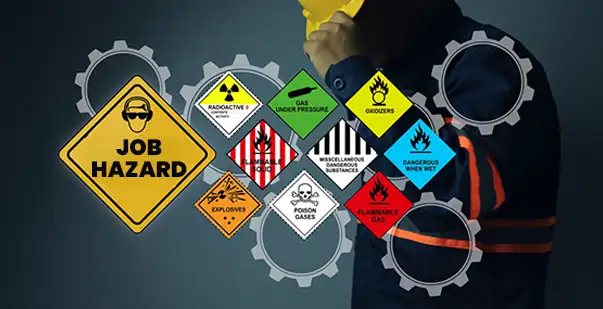
In 2023, U.S. employers reported over 2.6 million nonfatal workplace injuries and illnesses, many tied to hazards that could have been avoided with better planning. Yet, one common misconception persists that safety assessments are just paperwork. In reality, Job Hazard Analysis (JHA) and its construction-focused counterpart, Activity Hazard Analysis (AHA), are important to create safer worksites. AHA construction meaning refers to a structured process used on construction sites to identify potential hazards in each task, assess their risks, and plan effective controls before work starts.
A well-done JHA helps you break down each job, identify risks, and apply effective controls before anyone is exposed to danger. This guide will walk you through how to complete a JHA step by step, turning safety from a checklist into a real part of daily work.
What is Job Hazard Analysis?
A JHA is a step-by-step review of a specific task to identify potential risks and decide the most effective controls before work begins. It’s a proactive tool that improves workplace safety and supports compliance with OSHA’s General Duty Clause and personal protective equipment (PPE) assessment rules. In construction, this process is often called Activity Hazard Analysis (AHA). A JHA or AHA in construction should be updated whenever tasks, equipment, materials, or duties change. It’s a practical safety tool that helps employers meet OSHA requirements, supports PPE selection, and reduces the chance of injuries on the job.
Read More: GHS Hazard Sign, Symbol & Pictogram Meanings
How to Complete a JHA? Step-by-Step Process
Supervisors, safety managers, and experienced workers should work together to understand the AHA safety meaning and examine how a job is done, identify risks, and apply the right controls. Follow these eight OSHA-backed steps to make the process thorough and effective:
Step 1: Pick The Right Job To Analyze
Start where risk is highest. OSHA 3071 suggests prioritizing jobs with serious injury potential, a history of incidents or near-misses, non-routine or new work, and tasks with multiple people or interfaces. If nothing else, pick the job that feels most critical or potentially dangerous. Here’s a quick shortlist to get going:
New or modified tasks (new equipment, new chemicals, new method)
Non-routine work (setups, changeovers, shutdowns, maintenance)
High-energy tasks (work at height, confined spaces, lockout/tagout interfaces)
Jobs with repeated minor injuries or near-misses
Step 2: Break The Job Into Clean Steps
Watch the best-qualified worker do the job under normal conditions. Break the job into 6 - 10 high-level steps in the order they happen, with enough detail to see where hazards appear. Confirm the list with the worker and supervisor. This “observe then verify” cadence is straight from OSHA 3071. Here are a few pro tips for you:
Film a short clip (if allowed) so you can replay motions and hand placement.
Note set-up and clean-up. Many injuries happen at the edges of the job.
Flag any “workarounds” you see. If it’s happening during observation, it’s probably common practice.
Step 3: Identify Hazards For Each Step
Now, for every step, ask: What could go wrong? What could cause harm? Look beyond the obvious and consider all hazard types:
Physical: Struck-by, caught-in/between, slips/trips/falls, noise, heat/cold, electricity
Chemical: Inhalation, skin/eye contact, ingestion
Biological: Bloodborne pathogens, mold, animals/insects
Ergonomic: Forceful exertion, awkward posture, repetition
Environmental/Operational: Traffic, line-of-fire, poor lighting, housekeeping, shift changes
OSHA’s worksheets and resource sheets lay out practical checklists and forms for this step. If you need deeper health-hazard support (e.g., exposures you can’t measure in-house), NIOSH’s Health Hazard Evaluation (HHE) program offers free workplace assessments.
Step 4: Choose Controls Using the Hierarchy
Don’t jump straight to PPE. Use the Hierarchy of Controls to pick solutions in order of effectiveness:
This order is NIOSH/OSHA canon. Design out the hazard if you can; if not, isolate it; if not, manage exposure; PPE comes last as the last line of defense. Consider an example of portable ladder access to a mezzanine:
Eliminate: Install permanent stairs; no ladder needed.
Substitute: Use a mobile platform ladder with guardrails instead of a straight ladder.
Engineering: Add anchor points and a self-closing gate at the mezzanine edge.
Administrative: Two-person rule, spotter, ladder inspection checklist, work permit for elevated access.
PPE: Fall-protection harness and lanyard if required by the setup.
Step 5: Write the JHA Clearly and Concisely
Once hazards and controls are identified, safety managers should document them using a structured JHA form. Each step should include:
Job step: A short action phrase
Hazards: Specific risks, not vague terms
Controls: Matched to each hazard and ordered by effectiveness
Owner/Status: Who will implement the control and by when
OSHA provides sample forms you can adapt. Keep one job per sheet, and attach photos/sketches if it helps.
Step 6: Validate With The People Who Do The Work
Do a quick field walk-through with people doing the job. Ask if the steps reflect real work conditions and whether the proposed controls are practical. This is where you learn if your plan aligns with reality or if there are any gaps.
If you identified the need for PPE, remember OSHA’s 1910.132(d) requires a documented hazard assessment and PPE selection, plus training on use and limits. Many companies use a simple sign-off form linked to the JHA.
Step 7: Implement, Train, and Make It Routine
Controls don’t help anyone if they stay on paper. Supervisors should integrate the JHA into:
Standard work/SOPs: Update procedures and visual work aids.
Permits & pre-job briefs: Use the JHA to guide toolbox talks and “pause points.”
Training: Short, focused sessions on the changed steps and why the controls matter.
Supervision: Spot-check early and coach gaps.
This step also helps meet the General Duty Clause. If a serious, recognized hazard exists and you don’t take reasonable steps, you can be cited, even without a specific standard. A solid JHA with implemented controls is strong evidence that you’re meeting your duty.
Step 8: Review and Refresh
A JHA isn’t a one-time document. Supervisors and safety teams should revisit it whenever there’s a change. So, update the JHA when any of these happen:
New equipment/materials, process change, or layout change
New injury/illness, near-miss, or audit finding
New crew, contractor involvement, or seasonal/weather shifts
PPE reassessment (OSHA expects periodic reviews as conditions change)
Set a cadence, quarterly for high-risk tasks, annually for stable, low-risk work. Keep updates simple and quick so they become part of routine safety.
Note: As of 2025, penalties under the General Duty Clause can reach up to:
$16,550 per violation (serious or other-than-serious)
$165,514 per violation (willful or repeat violations)
Beyond fines, citations also expose you to legal liability and can affect contracts and insurance. A well-documented JHA, backed by implemented controls, is strong evidence that you took reasonable steps to protect workers.
Common Mistakes in Job Hazard Analysis (and How to Fix Them)
Even well-intentioned JHAs, or Activity Hazard Analyses (AHAs), when used in construction, often miss the mark because of a few recurring mistakes. These errors weaken safety planning and reduce the impact of your hazard controls. Here are five common pitfalls and how to avoid them:
Overly Long And Complex JHAs
Ten-page documents packed with detail rarely get read on site. Keep the JHA or AHA safety plan focused on key steps and controls. Link deeper technical information to standard operating procedures (SOPs) instead of burying it in the analysis.
Relying Too Much on PPE
If “wear PPE” is your main solution, you’re skipping critical steps. Apply the Hierarchy of Controls, elimination, substitution, engineering, and administrative measures, before PPE. This makes your hazard control plan more effective and aligns with OSHA expectations.
Creating JHAs From Behind a Desk
A document built without field input often ignores how work is actually performed. Observe tasks in real conditions, involve experienced workers, and validate steps with the crew. This makes your AHA in construction relevant and grounded in real work practices.
Lack of Follow-through
Even the best analysis fails if controls aren’t implemented. Assign owners, set deadlines, and track actions to closure. Treat the JHA as a living document, not a static checklist.
Failure To Review And Update
Work environments change, and new equipment, materials, or processes can introduce new hazards. Review your AHA safety plan after incidents, near-misses, or changes to keep it current and effective.
Read More: What Is Hazard Communication Standard (HCS)?
Build a Safer Workplace with the Right JHA Training
A well-executed Job Hazard Analysis (JHA) is one of the most effective ways to prevent injuries before they happen. After understanding the AHA construction meaning, you will identify hazards early, apply the right controls, and meet OSHA’s safety expectations. But doing it right requires more than basic awareness. It calls for structured training and real-world practice.
If you’re ready to take safety planning to the next level, enroll in our Job Hazard Analysis Training today. The course is designed for supervisors, safety professionals, and construction leads who want to master JHA and AHA processes. Take your first step to build safer worksites, reduce risks, and strengthen your team’s safety culture.
FAQs
How often should a Job Hazard Analysis be reviewed?
A JHA should be reviewed at least annually for stable tasks and quarterly for high-risk work. It must also be updated immediately after incidents, near-misses, process changes, or when new equipment, materials, or crews are introduced.
Who should participate in creating a JHA or AHA?
Supervisors, safety managers, and experienced workers should work together on a JHA. This ensures the analysis reflects real job conditions, captures potential hazards accurately, and identifies practical controls that crews will actually follow on site.
Does OSHA require a JHA for every job?
OSHA does not mandate JHAs for every task, but employers must protect workers under the General Duty Clause. Conducting JHAs, or AHA in construction, is one of the most effective ways to demonstrate compliance and prevent citations.
References: